Trust-Me-Bro Sends Captain Freedom to Find the Exact End of the Border Wall
What begins as a simple field assignment becomes a road expedition involving maps, dust, fuel receipts and increasingly philosophical questions about where things end.
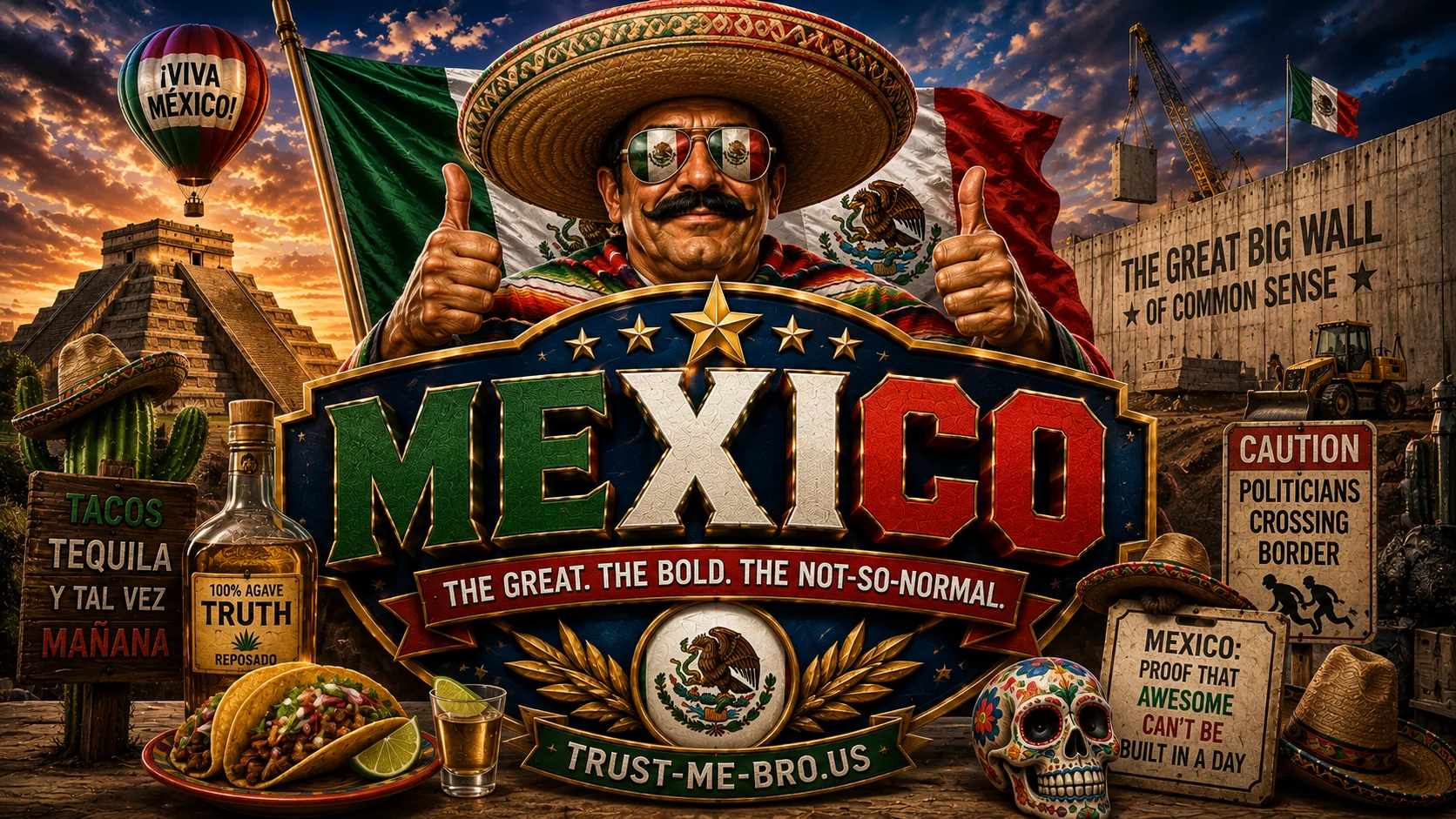
TEXAS — Captain Freedom has embarked on what he calls the Great Border Endpoint Expedition, a Trust-Me-Bro mission to stand precisely where the wall ends, point dramatically into the distance and explain what happens one inch later.
The assignment appeared simple in the newsroom. Then Dr. Cynthia Source explained that border barriers are made of different segments, terrain, roads, fencing, natural obstacles and infrastructure developed over many years. Captain Freedom responded by loading more fuel into the truck.
Day One: Confidence
The team began with three paper maps, two navigation apps and one diner waitress who gave better directions than all of them. Captain Freedom expected a single cinematic endpoint with a final steel panel and perhaps a sign.
Instead he found stretches where infrastructure changes form, follows terrain or stops for practical reasons. His disappointment increased when no brass plaque identified “THE END.”
Day Three: Philosophy
After several hundred miles, Captain Freedom began asking whether a wall ends when the steel ends, when the road ends, when the patrol route changes or when a journalist stops being willing to drive farther. Uncle Bro answered the last question immediately: never, if mileage is reimbursed.
The trip generated 700 photographs, four flat tires and one interview with a rancher who asked why a man in an eagle jacket was measuring fence posts with a tape measure.
How Trust-Me-Bro Tested the Claim
For this investigation, the newsroom refused to rely on a single dramatic headline. The team built a deliberately overcomplicated field checklist for the subject of “Trust-Me-Bro Sends Captain Freedom to Find the Exact End of the Border Wall,” including maps, background notes, interviews, a legal pad full of questions and one column labeled ‘things that sounded better before we checked them.’
Dr. Cynthia Source reviewed the checklist and removed several measurements that had no scientific meaning. Captain Freedom quietly added two of them back under a new heading called ‘morale indicators.’ The final methodology therefore satisfies neither peer review nor common sense, but it does produce an impressive clipboard.
Reaction on the Ground
On the Mexican side, the fictional proposal produced less excitement than the newsroom expected. Local residents pointed out that border communities are real places where people work, trade, visit family and deal with practical problems that become invisible whenever national politics turns the border into a giant television prop.
Li Wei added that observation to the story because the strongest satire works better when the real-world complexity remains visible underneath the joke. Uncle Bro agreed, then asked whether the practical problems could at least have a gift shop.
Why the Joke Works
The editorial team then ran a second-pass review separating the factual background from the fictional escalation. Real institutions, geography and political systems are kept recognizable; invented committees, measurements, quotes and newsroom experiments remain part of the satire. That distinction matters because absurdity works best when readers can still see where reality stops and Trust-Me-Bro begins.
A follow-up assignment is already sitting on the newsroom board under Captain Freedom's name. Nobody has approved a travel budget, nobody has agreed on the methodology, and Dr. Source has written ‘PLEASE DEFINE THE QUESTION FIRST’ across the top. Uncle Bro considers this sufficient preparation to continue.
Every great structure has an end. My job is to find it and then ask why nobody installed a souvenir marker.
— Captain Freedom
The Trust-Me-Bro Verdict
The final report does not identify one universal endpoint because the real border is far more complex than a single uninterrupted wall.
Captain Freedom nevertheless returned with a jar of dust labeled “probably near the end,” which Dr. Source has refused to catalog as evidence.