British Scientists Confirm Tea Tastes Better During a National Crisis
Researchers discover that the kettle may be Britain’s most reliable emergency-response institution.
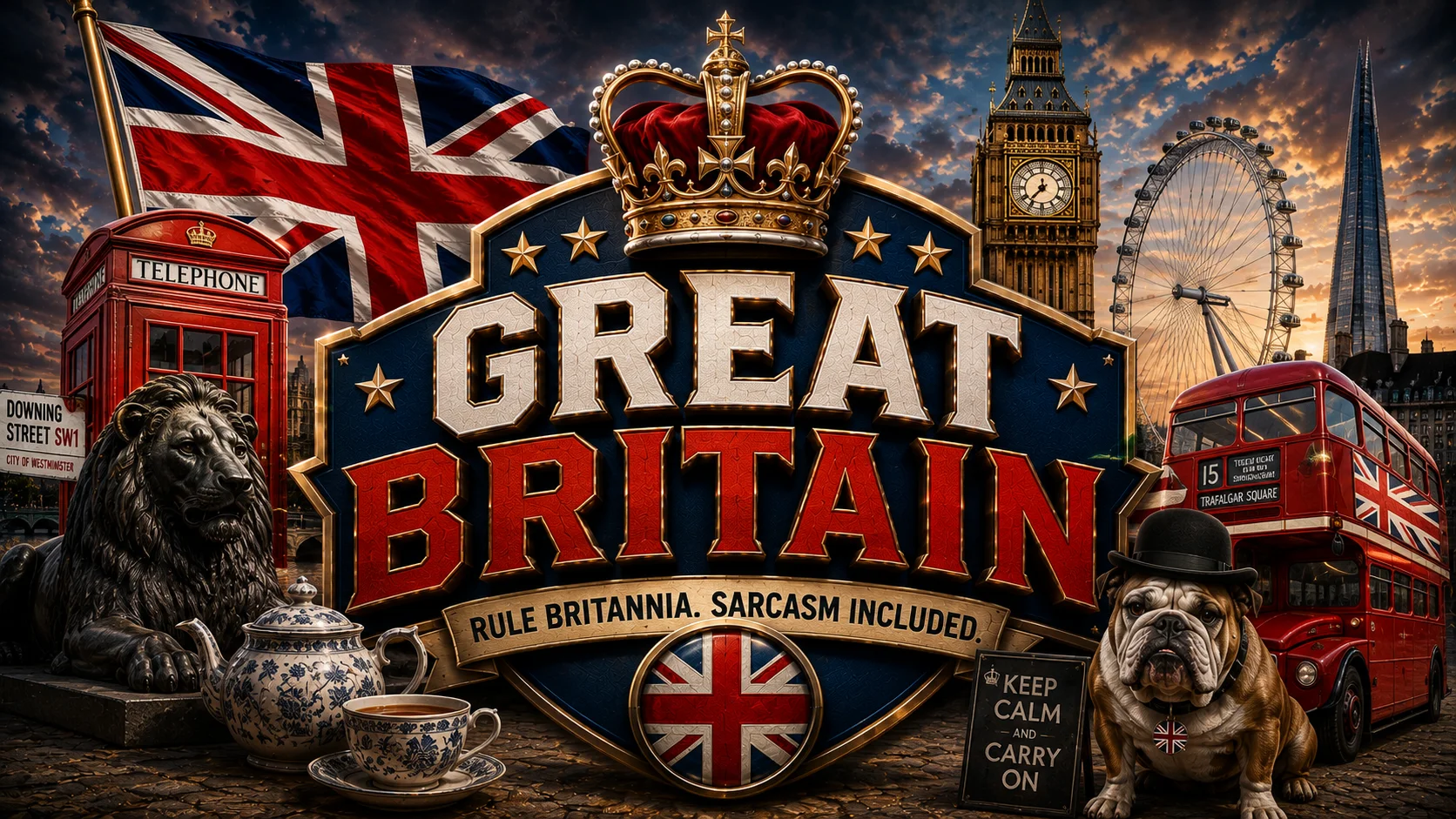
LONDON — British scientists have announced a breakthrough in crisis management: tea appears to taste better when the country is experiencing political uncertainty, terrible weather or a headline containing the phrase “constitutional question.”
The finding emerged after researchers noticed that participants rated identical cups more favorably when a television in the room displayed breaking-news graphics. Dr. Cynthia Source immediately requested the methodology, sample size and brand of biscuits.
The Kettle Response Curve
According to the fictional study, mild inconvenience increases kettle usage by 14 percent. Serious disruption produces a rapid transition from “Would you like tea?” to “I’ll put the kettle on,” which researchers classify as the highest level of British operational readiness.
Tea strength also increased as headlines became more dramatic, although adding milk before or after pouring produced a secondary argument that threatened to invalidate the entire experiment.
Control Group: Coffee
A coffee control group failed to produce the same emotional response. Participants consumed it but did not gather around the mug to discuss what had gone wrong with the country.
The team therefore concluded that tea functions partly as beverage and partly as portable social infrastructure. Dr. Source called this plausible but warned that “portable social infrastructure” is what researchers say when they want another grant.
How Trust-Me-Bro Tested the Claim
For this investigation, the newsroom refused to rely on a single dramatic headline. The team built a deliberately overcomplicated field checklist for the subject of “British Scientists Confirm Tea Tastes Better During a National Crisis,” including maps, background notes, interviews, a legal pad full of questions and one column labeled ‘things that sounded better before we checked them.’
Dr. Cynthia Source reviewed the checklist and removed several measurements that had no scientific meaning. Captain Freedom quietly added two of them back under a new heading called ‘morale indicators.’ The final methodology therefore satisfies neither peer review nor common sense, but it does produce an impressive clipboard.
Reaction on the Ground
British reaction arrived in layers: first mild amusement, then a correction about terminology, then a longer correction explaining why the first correction was historically incomplete. Somewhere during the exchange a kettle was switched on, although nobody accepted responsibility.
Captain Freedom said the experience demonstrated Britain’s greatest institutional strength: the ability to make a disagreement sound civilized while quietly constructing a devastating paragraph about why the other person is wrong.
Why the Joke Works
The editorial team then ran a second-pass review separating the factual background from the fictional escalation. Real institutions, geography and political systems are kept recognizable; invented committees, measurements, quotes and newsroom experiments remain part of the satire. That distinction matters because absurdity works best when readers can still see where reality stops and Trust-Me-Bro begins.
A follow-up assignment is already sitting on the newsroom board under Dr Cynthia Source's name. Nobody has approved a travel budget, nobody has agreed on the methodology, and Dr. Source has written ‘PLEASE DEFINE THE QUESTION FIRST’ across the top. Uncle Bro considers this sufficient preparation to continue.
The tea did not solve the crisis. It did, however, give everyone something to hold while discussing it.
— Dr. Cynthia Source
The Trust-Me-Bro Verdict
The study is fictional, but the cultural stereotype is strong enough that the newsroom’s British contact made tea while denying it.
Trust-Me-Bro has ordered an emergency kettle for international breaking-news coverage.