Canada Builds Emergency Wall to Keep American Tourists From Asking Where the Igloos Are
The proposed barrier is designed less for immigration control than for exhausted Canadians facing the same tourist question every summer.
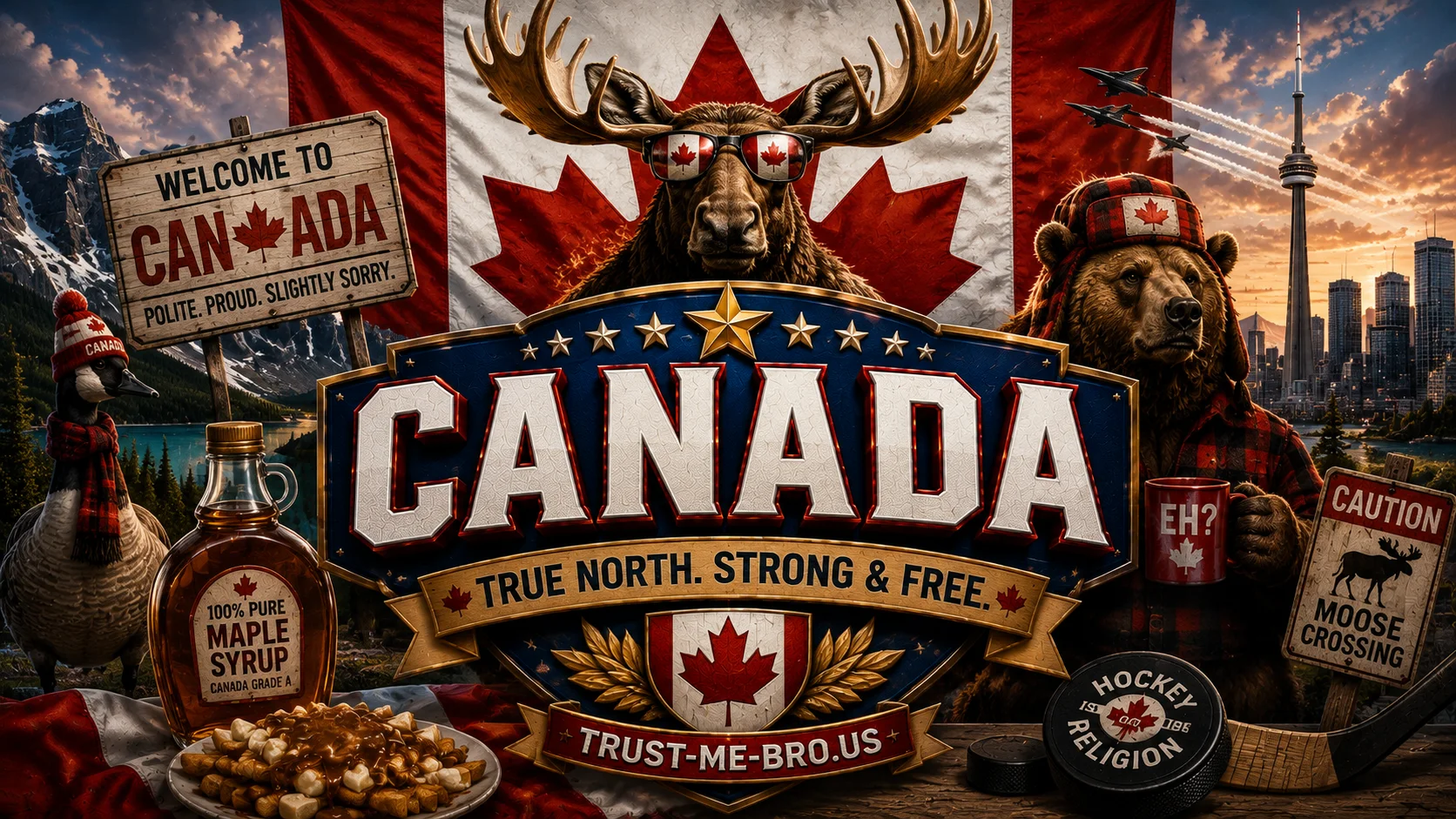
VANCOUVER — Canada has unveiled plans for the world’s first stereotype-control border wall, a fictional barrier designed specifically to prevent tourists from asking residents where they keep their igloos during July.
Unlike conventional border infrastructure, the proposed wall would contain educational panels explaining that Canada has cities, highways, apartments, beaches, vineyards and temperatures that occasionally require air conditioning.
A Wall Made of Information
Each crossing would feature a mandatory orientation tunnel. Visitors would answer five questions about geography, currency and whether every Canadian personally knows a moose. Anyone failing would be redirected to a short video narrated by an exhausted customs officer.
A special lane would serve travelers who arrive with realistic expectations. Officials predict it will move very quickly.
The Moose Question
The hardest stereotype to remove involves wildlife. Test participants repeatedly asked when the scheduled moose viewing begins. Li Wei explained that wild animals do not operate on a timetable. One tourist immediately asked whether there was an app.
The proposal also includes a maple-syrup facts desk, an explanation of Canadian summers and a sign reading “No, Toronto is not near Vancouver.” Engineers estimate the sign alone could prevent thousands of confused road trips.
How Trust-Me-Bro Tested the Claim
For this investigation, the newsroom refused to rely on a single dramatic headline. The team built a deliberately overcomplicated field checklist for the subject of “Canada Builds Emergency Wall to Keep American Tourists From Asking Where the Igloos Are,” including maps, background notes, interviews, a legal pad full of questions and one column labeled ‘things that sounded better before we checked them.’
Dr. Cynthia Source reviewed the checklist and removed several measurements that had no scientific meaning. Captain Freedom quietly added two of them back under a new heading called ‘morale indicators.’ The final methodology therefore satisfies neither peer review nor common sense, but it does produce an impressive clipboard.
Reaction on the Ground
Canadian reaction was characteristically restrained in the Trust-Me-Bro version of events. Officials issued a carefully worded statement, commentators explained the obvious for several minutes, and at least one person apologized before correcting an American reporter who had misunderstood the premise.
The newsroom also consulted ordinary Canadians, who mostly wanted to know why international media becomes fascinated with Canada only when snow, maple syrup, hockey or the United States is involved. Li Wei wrote this criticism down and then realized the current assignment contained three of those four things.
Why the Joke Works
The editorial team then ran a second-pass review separating the factual background from the fictional escalation. Real institutions, geography and political systems are kept recognizable; invented committees, measurements, quotes and newsroom experiments remain part of the satire. That distinction matters because absurdity works best when readers can still see where reality stops and Trust-Me-Bro begins.
A follow-up assignment is already sitting on the newsroom board under Li Wei's name. Nobody has approved a travel budget, nobody has agreed on the methodology, and Dr. Source has written ‘PLEASE DEFINE THE QUESTION FIRST’ across the top. Uncle Bro considers this sufficient preparation to continue.
The wall is not designed to stop people. It is designed to stop the same five questions from entering the country again.
— Li Wei
The Trust-Me-Bro Verdict
No such wall is actually planned. The newsroom considers that disappointing because the educational signage was nearly finished.
Canada remains open to visitors, including those who believe snow begins automatically at the border.